 Oceania & Pacific · Modernised and illustrated edition
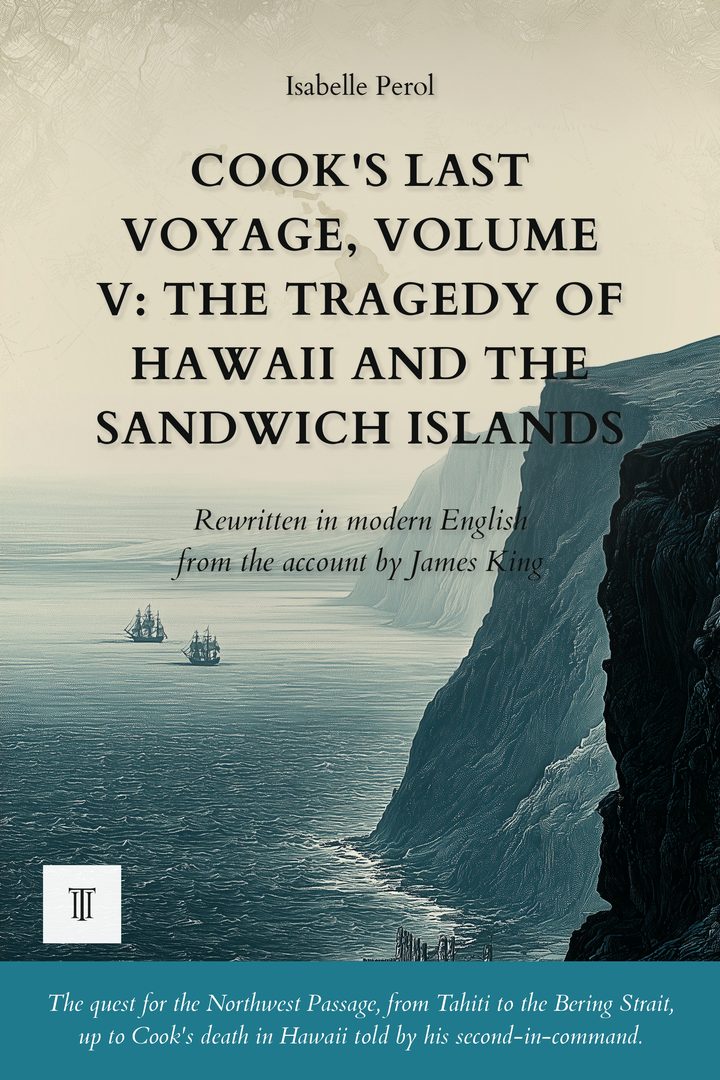
Cook's Last Voyage, Volume V: The Tragedy of Hawaii and the Sandwich Islands
Modernized, illustrated English edition of A Voyage to the Pacific Ocean by James King (1776-1780). 260 pages.
January 17, 1779: James Cook drops anchor at Hawaii, hailed as Orono. A month later, he dies beneath the daggers. James King tells the story and paints a portrait of the Sandwich Islands. Volume V, rewritten in modern English.
Read more ↓- 260 pages
- Paperback · Ebook (EPUB)
- English
- 18th century
About this book
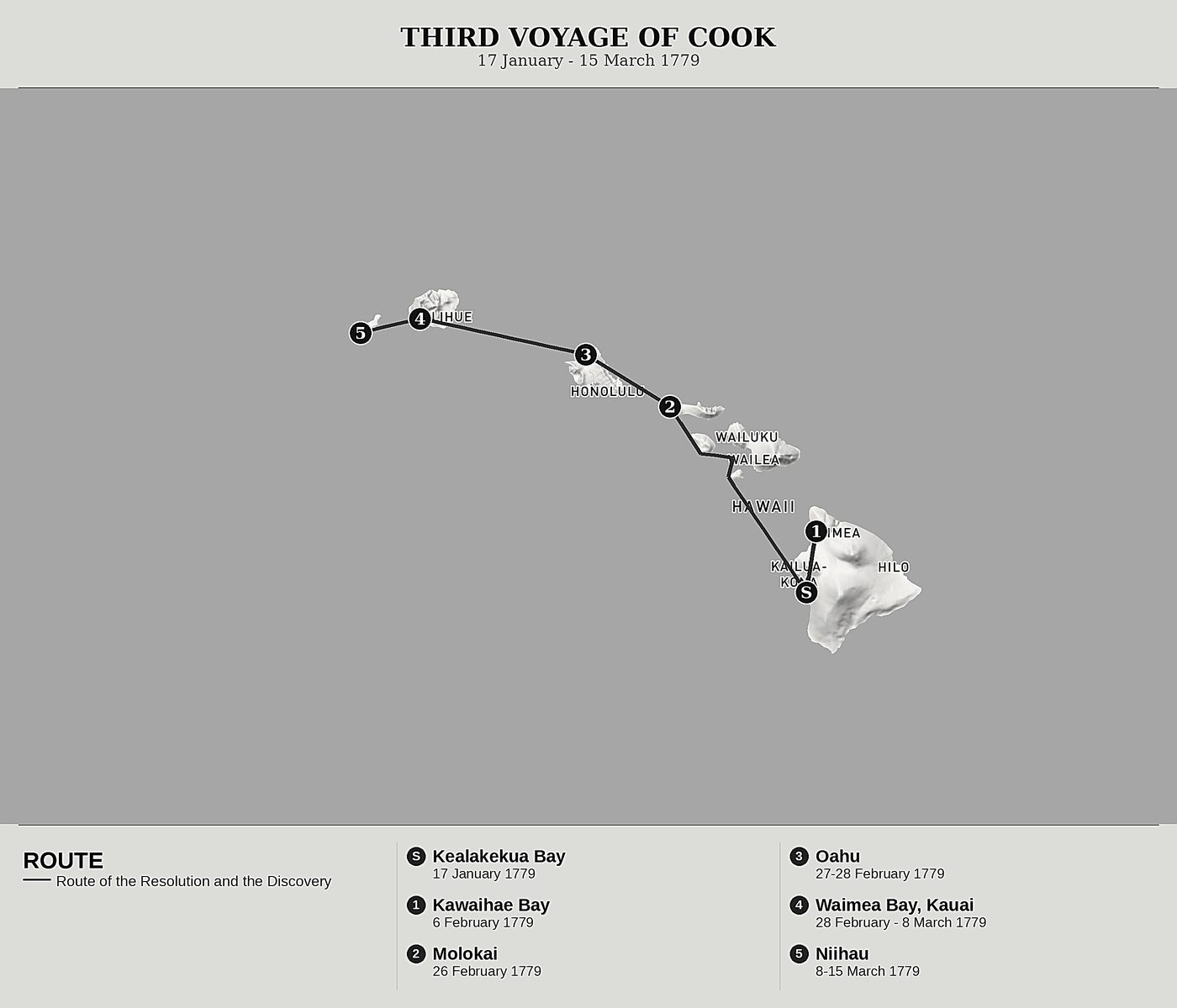
January 17, 1779. Two English ships drop anchor in Kealakekua Bay, on the great island of Hawaii, amid a thousand canoes that have come out to meet them. Priests lead James Cook onto the great platform of worship, the morai, where he is honored almost to the point of adoration and hailed under the name of Orono. King Terreeoboo comes in person to exchange his feathered cloak and his name with the captain. Nothing in this unparalleled welcome hints at what is to come.
A month of feasting and provisions offered, then departure. A squall breaks a mast and forces the two ships back to a bay that has turned cold and silent. A boat stolen in the night, then a pinnace taken in turn: Cook decides to hold the king hostage on the beach at Kaawaloa. The crowd arms itself, a shot is fired, and on February 14, 1779, the greatest navigator of the century falls beneath the daggers, thirty paces from his boats.
The journal kept in Cook's own hand stops short. It is his second lieutenant, James King, twenty-eight years old, an astronomer and friend to the island's priests, who takes up the pen. A week of stratagems and reprisals, a white flag carried ashore, the village of Kakooa set ablaze, and then the captain's bones at last returned and committed to the sea. The ships then resume their course from island to island, searching in vain for an anchorage at Maui, Molokai, and Oahu, before facing one last clash over water at Kauai.
King then draws the first complete portrait of the archipelago: eleven islands named in honor of Lord Sandwich, the volcanoes Mauna Kea and Mauna Loa, whose height he calculates, a population estimated at four hundred thousand souls, the law of taboo explained at last, and those islanders who let themselves be carried, lying on a board, by waves where no European launch would dare venture.
This fifth volume corresponds to Book V of the original edition, A Voyage to the Pacific Ocean (London, 1784): from the arrival at Kealakekua on January 17, 1779, to the departure from the Sandwich Islands in mid-March. It is the text in which the narration changes hands: after Cook's death, it is James King who tells the story, in the words of a direct witness rather than the captain himself.
Fifth of the six volumes devoted to James Cook's third and final voyage, in the Forgotten Travel Journals collection. Each volume can be read on its own.
A first complete modern rewriting for today's reader, making this account readable without betraying anything of the voyage. Twenty original illustrations and redrawn maps bring the route to life, while a set of reference tools (glossary, timeline, index, editor's note, afterword, and further reading) and selected passages from the original text shed light on the reading.
Product details
- Publisher
- Itinerarium Éditions
- Series
- Oceania & Pacific
- The author
- James King
- Date of the journey
- 1779
- Modern edition by
- Isabelle Perol
- Language
- English
- Format
- Paperback, 6 × 9 in (15.2 × 22.9 cm)
- Pages
- 260
- ISBN
- 978-2-489331-28-8
- Published
- September 2026
The author
James King
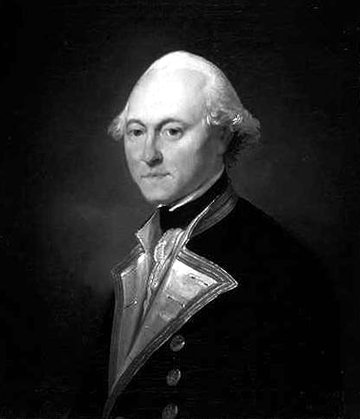
A Royal Navy officer and astronomer, James King (1750-1784) sailed as second lieutenant aboard the Resolution during James Cook's third and final voyage. Present in Hawaii on February 14, 1779, he witnessed the death of his captain on the beach at Kaawaloa and subsequently negotiated the return of his body from the island's priests and chiefs. After the death of Captain Clerke, he took command of the Discovery and brought the expedition back to England. At the Admiralty's request, he wrote the third and final volume of the official account of the voyage, published in 1784. He died of tuberculosis that same year, at the age of thirty-four, shortly after completing this text.
All books by James King →A Voyage to the Pacific Ocean: Our editorial work
This fifth volume contains Book V of the official account: two months of 1779, from the ships' anchoring in Kealakekua Bay on 17 January to the final departure from the Sandwich Islands in mid-March. These pages open the third and last volume of the great London edition of 1784, prepared by John Douglas, canon of Windsor. What the series has settled once and for all is not repeated here: this note deals only with the decisions made for this particular book.
The major fact is a change of voice. Since the first volume, the reader has followed Cook's journal; he now follows that of James King, second lieutenant of the Resolution and astronomer of the expedition, who writes "I," speaks of the captain in the third person, and signs the entire book. We have never allowed this boundary to blur: where the old French translation sometimes lent the commander sentences belonging to his subordinate, the modern account maintains the distinction throughout. King, moreover, wrote two of the account's six books and oversaw the printing of the whole; he is the only officer aboard to whom the Admiralty entrusted this double charge, and he died a few months after publication.
The division into chapters demanded more work than in the previous volumes. Eight original chapters became eleven in this book: three of them ran far beyond the length a reader today can cover in one sitting, and each carried at its midpoint a seam that the text itself marks. The third was cut at the sentence where King turns from the account of the death to the eulogy of the dead man; the fourth, at the nocturnal arrival of the two priests bringing a fragment of the body; the seventh, at the point where the portrait of the people gives way to the survey of their material life. The chapter containing the eulogy of Cook was kept deliberately short: it is a literary tomb, and lengthening it by a single word would have weakened it. Nothing has been merged, nothing moved, no episode cut away.
Before / after
For it was remarked, that whilst he faced the natives, none of them had offered him any violence, but that having turned about, to give his orders to the boats, he was stabbed in the back, and fell with his face into the water. On seeing him fall, the islanders set up a great shout, and his body was immediately dragged on shore, and surrounded by the enemy, who snatching the dagger out of each other's hands, shewed a savage eagerness to have a share in his destruction.
It was remarked, indeed, that as long as he faced the inhabitants, none of them offered him the least violence. But scarcely had he turned to give his orders to the boats than he received a stab in the back, and fell with his face in the water. On seeing him fall, the islanders raised an immense clamor. His body was at once dragged up onto the shore and surrounded by his assailants, who snatched the knife from one another's hands, showing a savage eagerness each to take his share in his death.
The journey mapped
The modern editor

More in this series
See all →