 Oceania & Pacific · Modernised and illustrated edition
Cook's Last Voyage, Volume VI: Kamchatka, Canton and the Return to England
Modernized, illustrated English edition of A Voyage to the Pacific Ocean by James King (1776-1780). 476 pages.
March 1779: Cook's orphaned crew crosses Kamchatka by sledge, battles the Arctic pack ice, loses Captain Clerke, and completes their voyage around the world by way of Canton and the Cape. Volume VI, modern English.
Read more ↓- 476 pages
- Paperback · Ebook (EPUB)
- English
- 18th century
About this book
March 1779. Cook has been dead for a month on a beach in Hawaii, and the expedition's two ships turn north once more to make a final attempt at forcing the Northwest Passage.
The account is now kept by James King, twenty-nine years old, second lieutenant turned narrator. He tells of the entry into a Kamchatka bay still gripped by ice, a Russian garrison that runs out its guns believing pirates have come, and then the crossing of the peninsula by dog sledge to Bolcheretsk, where Major Behm, commander of the province, empties his storehouses for these strangers and refuses all payment. He then tells of the following summer: the pack ice, heavier than the year before, which closes off every route to the Atlantic, and Captain Clerke, worn down by consumption ever since England, who writes the verdict with a dying man's hand before passing away within sight of the coasts he longed to see again, on 22 August 1779.
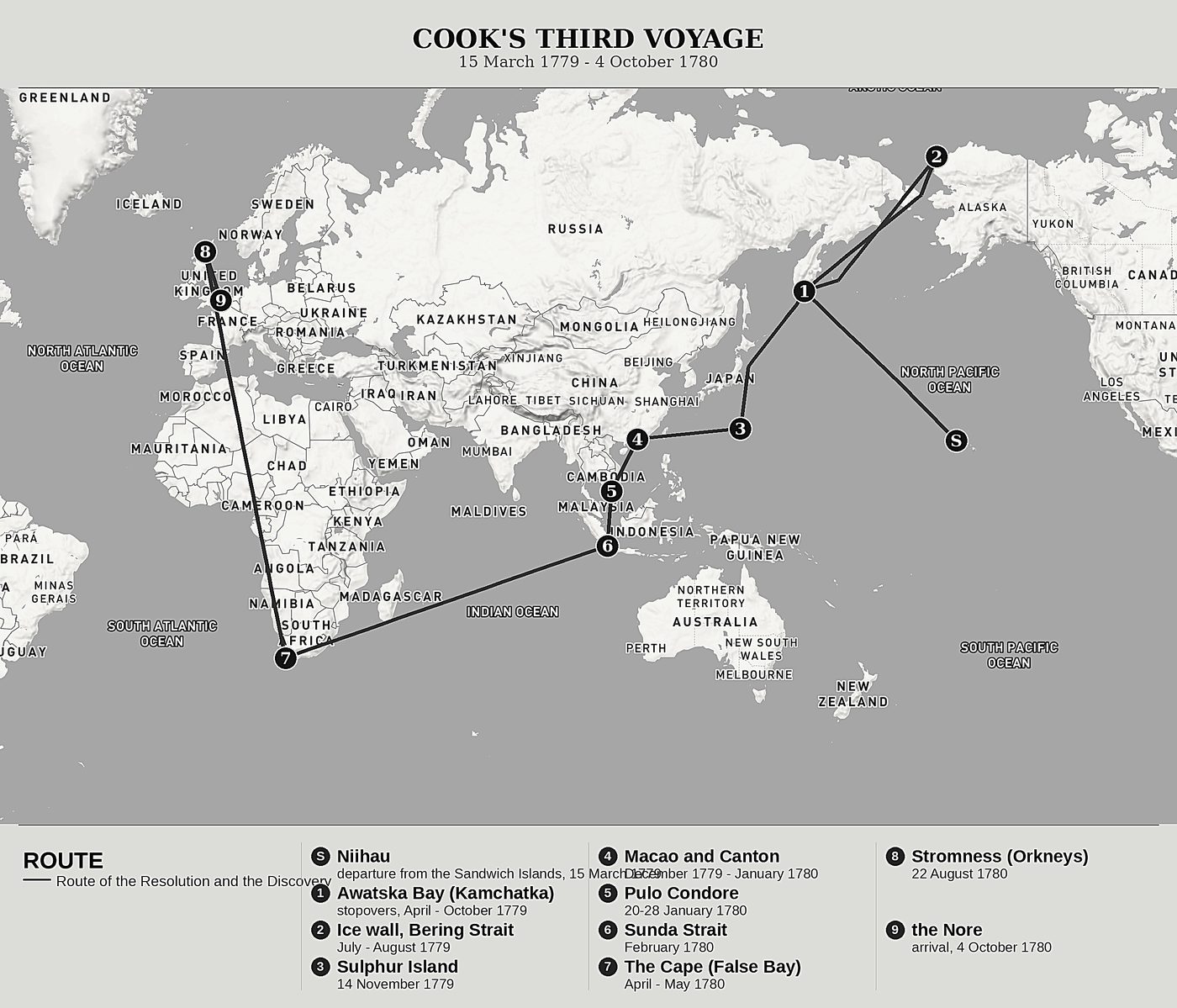
The whole world still remains to be crossed on the way home. The volcanoes, the sables and the peoples of Kamchatka, which King sets down in a long ethnographic portrait; the phantom islands that old charts placed off Japan; the storms and currents that drive the ships out to sea; a sulphur island smoking in the open ocean; and then Canton at last, where the sailors discover that the otter pelts once bartered for nails are worth a fortune, and where they learn all at once that Europe has been at war for three years. Then come Pulo Condore and its untamable buffaloes, the fevers of the Sunda Strait, the stop at the Cape, and the long detour by the Orkney Islands that closes the voyage.
This book is also James King's testament: it is he who takes command of the Discovery after Clerke's death, he who negotiates the sale of the furs at Canton and draws from it, figures in hand, the outline of a new trade between America and China, and he who will write, for the Admiralty and already coughing with the illness that carried off Clerke, the official account published in London in 1784. This volume corresponds to Book VI of that original edition, from the farewell to the Sandwich Islands in March 1779 to the final anchorage in the Thames estuary on 4 October 1780, after four years, two months and twenty-two days away.
The sixth and last of six volumes devoted to James Cook's third and final voyage, in the Forgotten Travel Journals collection. Each volume stands on its own.
The first complete modern rewriting for today's reader, which makes this account readable without betraying anything of the voyage. Original illustrations and 10 redrawn maps bring the route to life, while a set of reference tools (glossary, chronology, index, editor's note, afterword and further reading) and selected passages from the original text illuminate the reading.
Product details
- Publisher
- Itinerarium Éditions
- Series
- Oceania & Pacific
- The author
- James King
- Date of the journey
- 1779-1780
- Modern edition by
- Isabelle Perol
- Language
- English
- Format
- Paperback, 6 × 9 in (15.2 × 22.9 cm)
- Pages
- 476
- ISBN
- 978-2-489331-40-0
- Published
- September 2026
The author
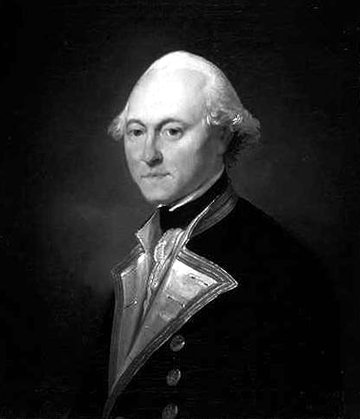
James King
An officer of the British Royal Navy and an astronomer, James King (1750-1784) sailed as second lieutenant aboard the Resolution on James Cook's third and last voyage. Present in Hawaii on 14 February 1779, he witnessed his captain's death on the beach at Kaawaloa and then negotiated the return of his body with the island's priests and chiefs. After Captain Clerke's death, he took command of the Discovery and brought the expedition home to England. At the Admiralty's request, he wrote the third and final volume of the official account of the voyage, published in 1784. He died of tuberculosis that same year, at thirty-four, shortly after completing this text.
All books by James King →A Voyage to the Pacific Ocean: Our editorial work
This sixth volume closes the series. It contains Book VI of the official account, which brings to an end the third of the volumes published in London in 1784 under the care of Canon John Douglas: nineteen months at sea, from the departure from Niihau on 15 March 1779 to the anchorage at the Nore, in the estuary of the Thames, on 4 October 1780. James King, who took up the pen in the previous volume, keeps it to the very end: it is he who recounts Kamchatka, the second attempt on the Arctic ice, China and the way home, and it is through his words that the journal of the three voyages comes to a close. The principles set out at the threshold of the series hold here unchanged; this note states only the decisions specific to this final volume.
Eleven original chapters, twenty-two in this edition. Book VI lines up massive chapters, several of which juxtapose matters that the text itself keeps separate; the split was made at these joints, without touching the order of the narrative or sacrificing a single episode. Two cases deserve mention, for the series offers no other example of them: twice over, the 1784 division breaks in its middle a movement that nothing should have interrupted. The ice-pack episode begins at the end of the third original chapter and continues into the fourth; Charles Clerke's death agony ends in the fourth and his funeral opens the fifth. We have restored each its unity: the wall of ice now reads in one unbroken sweep, and the captain's death, from the final fever to the birches of Paratounca, holds together in a single chapter, as a single act of mourning. At the other end of the book, the final chapter was left deliberately brief: it is the coda of the entire voyage, and to pad it out would have weakened it.
Before / after
On the 22d of August, 1779, at nine o'clock in the morning, departed this life Captain Charles Clerke, in the thirty-eighth year of his age. He died of a consumption, which had evidently commenced before he left England, and of which he had lingered during the whole voyage. His very gradual decay had long made him a melancholy object to his friends; yet the equanimity with which he bore it, the constant flow of good spirits, which continued to the last hour, and a cheerful resignation to his fate, afforded them some consolation.
On the 22nd of August 1779, at nine in the morning, Captain Charles Clerke died, at the age of thirty-eight. He died of consumption, that illness which eats away at the lungs and never lets go. It had plainly begun before ever he left England, and he had languished under it throughout the whole voyage. His decline, very gradual, had long since made him an object of sadness to his friends; but they found some consolation in the evenness of temper with which he bore it, in the fine cheerfulness that animated him until his last hour, and in the serene resignation with which he accepted his fate.
The journey mapped
The modern editor

More in this series
See all →