 Hidden Asia · Modernised and illustrated edition
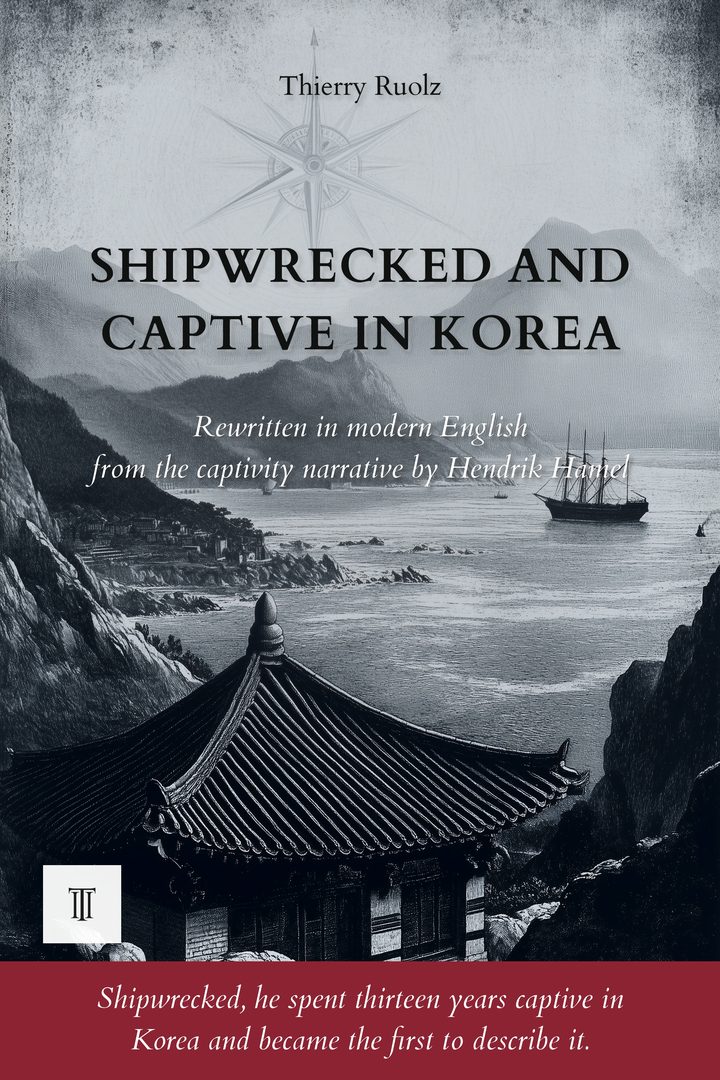
Shipwrecked and Captive in Korea
Modernized, illustrated English edition of Hamel's Journal (Journael) by Hendrik Hamel (1653-1666). 166 pages.
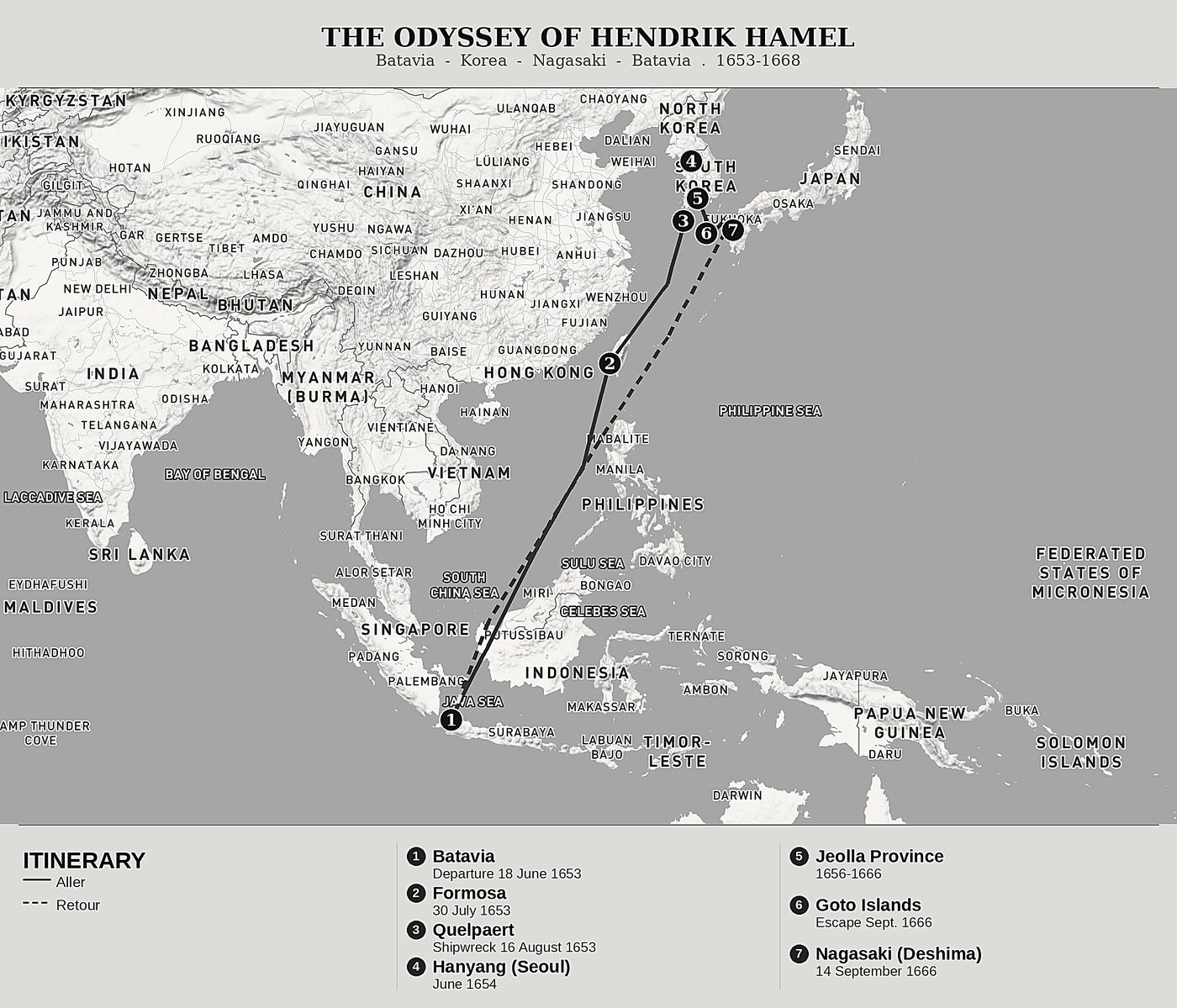
On 16 August 1653, the Dutch yacht De Sperwer breaks apart on the rocks of Quelpaert. Thirty-six survivors discover the hermit kingdom of Korea. Thirteen years will pass before eight of them reappear.
Read more ↓- 166 pages
- Paperback · Ebook (EPUB)
- English
- 17th century
About this book
On 16 August 1653, in the black night and storm of the China Sea, the Dutch yacht De Sperwer, sailing from Formosa toward Japan, breaks apart on the reefs of an unknown coast. Sixty-four men were aboard when she left port; twenty-eight die within the first hour, crushed between the planks or swallowed by the surf. At dawn, thirty-six survivors drag themselves onto a black beach, around the body of their captain, Reijnier Egberse. They do not yet know it: they have just landed in the hermit kingdom, a country that no one enters and no one leaves. Thirteen years will pass before eight of them reappear in the world of the living.
Hendrik Hamel, the ship's supercargo, keeps the journal of this long captivity. He describes the chains and interrogations on Quelpaert, the astonishing encounter with Jan Janse Weltevree, another Dutchman already forgotten there for twenty-six years, the forced march across the peninsula through Haenam and Jeonju, the audience with the king in Seoul, service in the royal bodyguard, the fortress refuge of Namhansanseong during the passage of the Tartars, and then the banishment to the garrisons and rice paddies of the south. He watches the Khan's ambassadors pass, honoured above the king himself, the comets of 1664 that unsettle the court, the soldier monks, the great famine that ravages the peninsula, the winters spent begging, and the secret purchase of a junk that finally carries eight of the castaways over the wall by night.
Through his pages, the silhouette of a kingdom kept apart from the world comes into view in Europe for the first time: its eight provinces and hundreds of towns, its laws and its differentiated punishments, its heated floors, its writing, its markets and its ginseng, its weddings and its dead wrapped in silk, its tribute paid north to the Khan. What Hamel reports is not the account of an explorer but that of a captive man, watchful, factual, a bookkeeper by training who counts the leagues, the rations of rice, and the coins of tael and cash even as he lives among strangers he cannot leave.
The first Western testimony on Joseon Korea, illustrated and annotated, this Journael, long smothered by the counterfeit and interpolated editions that circulated out of Amsterdam, here regains its original voice, restored from the manuscript that Hamel and his companions delivered to the Dutch East India Company in 1668. An unmatched document across three centuries, later confirmed by Bruno Hoetink's critical edition of 1920, it is the notebook of a castaway who learned, against his will, to live in the nameless country, and who returned to tell of it.
Complete rewriting in modern English of the captivity narrative: "Journael van de ongeluckige voyage van ’t jacht de Sperwer" by Hendrik Hamel, 1653-1666, including maps and illustrations.
Product details
- Publisher
- Itinerarium Éditions
- Series
- Hidden Asia
- The author
- Hendrik Hamel
- Date of the journey
- 1653-1666
- Modern edition by
- Thierry Ruolz
- Language
- English
- Format
- Paperback, 6 × 9 in (15.2 × 22.9 cm)
- Pages
- 166
- ISBN
- 978-2-489330-63-2
- Published
- June 2026
The author
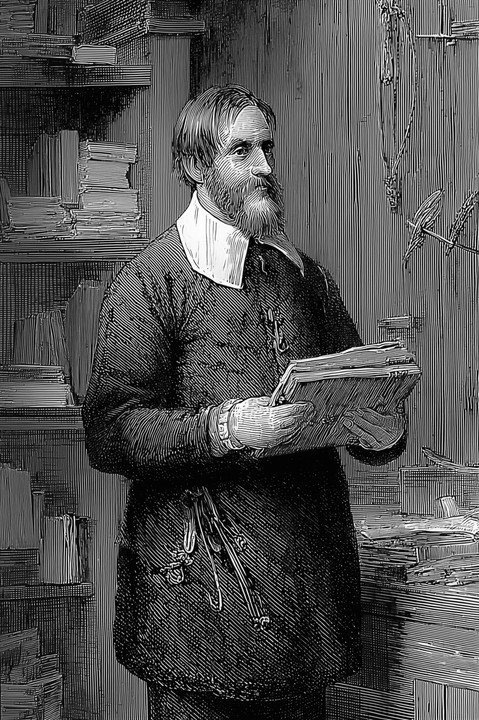
Hendrik Hamel
Hendrik Hamel (1630-1692), a supercargo with the VOC from Gorinchem (Gorkum) in South Holland, was shipwrecked with his crew on 16 August 1653 on the island of Quelpaert (Jeju). He spent thirteen years captive in Korea, becoming the first European to describe the Joseon kingdom from the inside. Back in The Hague in 1668, he wrote the Journael that bears his name. A unique document on seventeenth-century Korea, this text was published as early as 1668 before sinking under the interpolations of Amsterdam booksellers; it was not until Bruno Hoetink's critical edition (1920) that a reliable text was restored.
All books by Hendrik Hamel →Journael: Our editorial work
The text you have just read is a reconstruction. The manuscript that Hendrik Hamel and his companions submitted to the VOC authorities in Batavia in December 1667 is a long, dense ribbon of prose, without chapters, without headings, almost without paragraphs. The narrator moves without transition from a day's march along Korean roads to a description of the tribute paid to the Khan, then abruptly returns to a royal audience. This continuity, which made sense for an administrative report addressed to the Governor-General and Councillors of the Dutch Indies, would not have sustained the pace of a modern reading. We have therefore divided the account into fifteen chapters, following the natural boundaries one can discern between episodes: the shipwreck, the captivity on Quelpaert, Weltevree's appearance, the march to Seoul, the court, the incident with the Tartars, the banishment, the long chapters on the kingdom, the comets, the famine, the escape, the arrival at Nagasaki. The manuscript carried none of these titles: they are our proposal.
Hamel writes as though keeping a ship's log. The sentences are long, accumulative, sometimes awkward. Dates give the account its rhythm. The rice rations, the distances in leagues, the prices in taels recall that this was above all a document meant to justify the survivors' return and to assert their claim to back pay. We chose to preserve this factual, sometimes dry tone, rather than dress it in an emotion that does not belong to it. When Hamel says it is raining, it is raining; he does not hear the sound of water on the tiled roofs.
Before / after
Den 15en dito waeijdent soo hard, dat boven met den anderen spreekende malcander niet conden hooren, ofte verstaen, van gelijck niet een hant vol seijls voeren, leck vant schip soo toenemende, dat met pompen genoch te doen hadden, om lens te houden, cregen door de onstuijmigheijt vande zee somtijts zulcken water over dat niet anders en dochten, dan daer bij neder soude gesoncken hebben…
The wind blew with such force that two men standing side by side on the deck, shouting to one another, could neither hear nor understand each other. We no longer carried a handful of canvas. The leak gained steadily, and we had to exhaust ourselves at the pumps without respite, our backs broken, our hands raw, merely to stay afloat. The sea rushed upon us; at moments she shipped seas so heavy that we believed ourselves already sunk, swallowed, finished.
The journey mapped
The modern editor