Biography
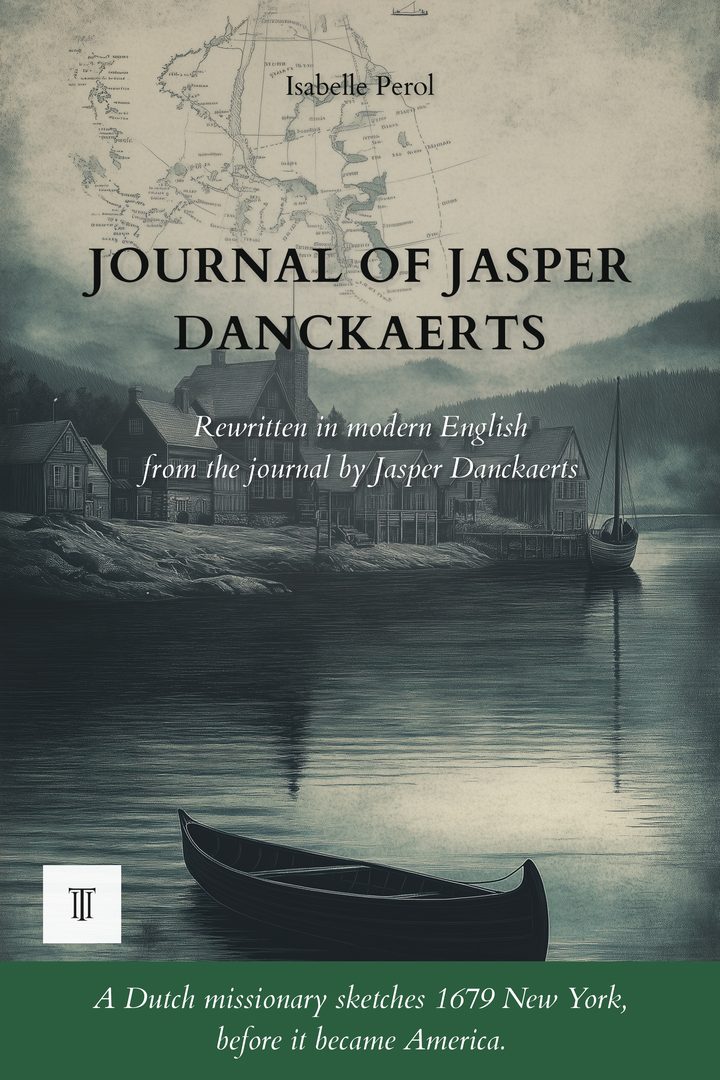
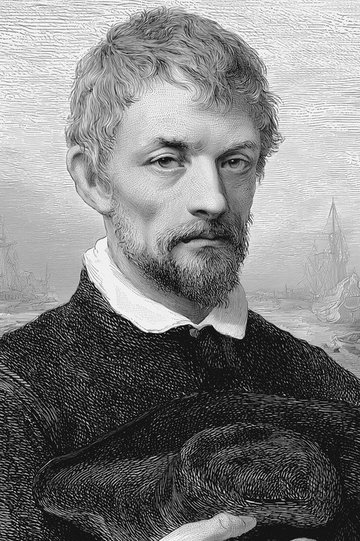
Jasper Danckaerts (1639-c. 1702) was a craftsman from Zeeland who became a member of a Dutch religious community, the Labadists, which sent him in 1679 to look in North America for land on which to settle. During this voyage he kept a daily journal in Dutch, illustrated with sketches made on the spot. This text is one of the most detailed descriptions of the former Dutch colonies that had passed under English rule fifteen years earlier.
He was born on 7 May 1639 in Vlissingen, in Zeeland, the son of Pieter Danckaerts and Janneke Schilders, and worked as a cooper. He joined the movement founded by Jean de Labadie, a former Jesuit who had gone over to Calvinism and who preached a Church of true believers separated from the world and living in common. After Labadie's death in 1674, the community settled at Wieuwerd, in Friesland, under the leadership of Pierre Yvon. Danckaerts became one of its brothers.
In 1679 he was charged, with Pieter Sluyter, with scouting a place of settlement overseas. The two men travelled under assumed names, Danckaerts borrowing that of his mother, Schilders. They landed in New York in September 1679, stayed in Brooklyn, went up the Hudson as far as Albany, travelled through New England as far as Boston, then the Delaware valley and Maryland, where they met the cartographer Augustine Herman and his son. They re-embarked for Europe on 23 July 1680.
The value of the journal lies in its material precision. Danckaerts notes prices, harvests, the construction of houses, the navigation of rivers, the way tobacco is grown and the state of the roads. He describes his encounters with Lenapes and Mohawks, reports remarks he had translated, and judges severely the colonists, English and Dutch alike, whose religion he finds lukewarm and whose morals lax. The manuscript also contains drawings, among them a view of the tip of Manhattan taken from the heights of Brooklyn in October 1679, the oldest known representation of the city made from life.
The mission succeeded. In 1683 the Labadists obtained from Augustine Herman a grant of some 3,750 acres on the Bohemia River, in Maryland, where a colony administered by Sluyter was established. It never exceeded a hundred people and disappeared after 1720. Danckaerts returned to America with the first colonists, passed through Dutch Guiana, became a citizen of Maryland in 1684, then went back to the Netherlands. He afterwards lived for the most part at Wieuwerd and died in Middelburg between 1702 and 1704; the exact date is not known.
The manuscript remained unknown for nearly two centuries. Henry C. Murphy, secretary of the Long Island Historical Society, came across it in 1864 at an Amsterdam bookseller's and published an English translation of it in 1867. A revised edition appeared in 1913, prepared by Bartlett Burleigh James and J. Franklin Jameson in the series Original Narratives of Early American History. Historians of New York, of Maryland and of the Native American societies of the mid-Atlantic coast have drawn on it ever since, as much for its field data as for the view of an observer who came from a marginal religious milieu, outside the interests of the merchants and colonial administrators.