 Hidden Asia · Modernised and illustrated edition
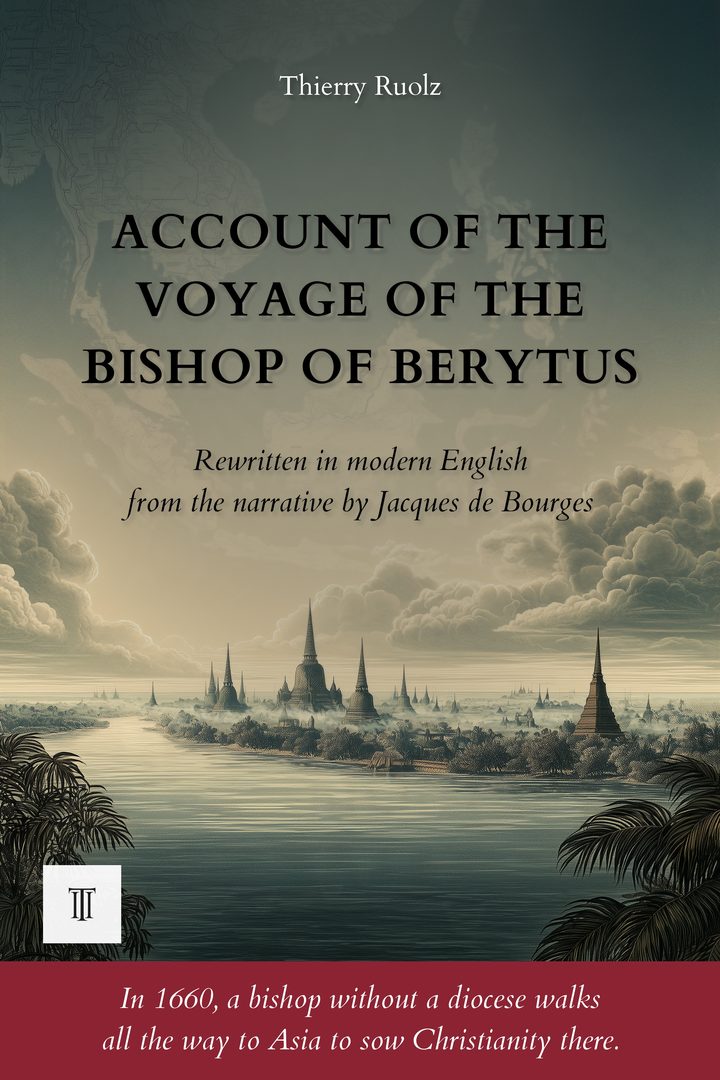
Account of the Voyage of the Bishop of Berytus
Modernized, illustrated English edition of Relation du voyage de Monseigneur l'évêque de Béryte by Jacques de Bourges (1660-1666). 268 pages.
A bishop without a diocese crosses Asia through Turkey, Persia and India to Siam, to found the first French mission toward the Far East, in 1660-1666.
Read more ↓- 268 pages
- Paperback · Ebook (EPUB)
- English
- 17th century
About this book
In July 1660, Pierre Lambert de la Motte, Bishop of Berytus for five weeks and Vicar Apostolic of a kingdom no Frenchman has ever set foot in, leaves Paris at dawn, without a farewell, to reach Asia by the only route still open: the land. The Portuguese refuse their passports, the Dutch will carry only their own servants, and the one French ship about to sail has just gone down in a winter storm.
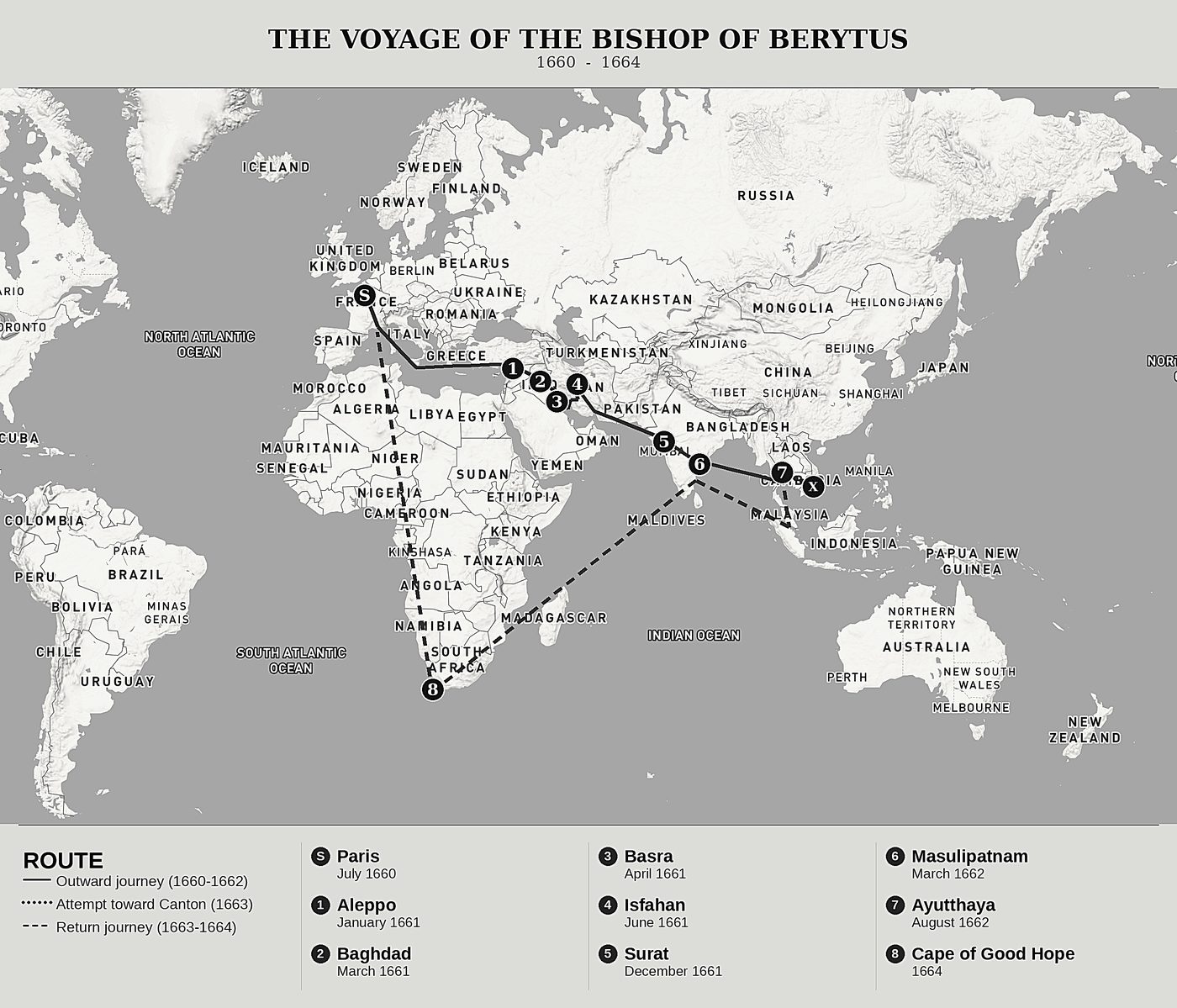
Two years on the road in Turkish dress take the bishop and his companions from Aleppo to Baghdad through the desert, amid Arabs and lions prowling around the tents, then down the Tigris to the Persian Gulf, over the mountains of Persia crossed by night to Isfahan, from the customs house at Surat to the ox-carts of the Mughal empire crossing Golconda and its diamond mine, all the way to the shores of Siam. Caravans, heat, famine at Masulipatnam where children are sold, a shipwreck narrowly escaped in a canoe, tigers and elephants mark a route no French missionary had yet described in such vivid detail.
At Ayutthaya, capital of a kingdom where every religion is tolerated, the travellers discover a refined civilization: its gilded pagodas and idols, its Buddhist scholars with whom the bishop debates theology, its rice and fruits unknown in Europe, its tea, its writing, its coinage, and the welcome it extends to foreigners of every nation. This encounter, recorded with great care, will soon nourish the founding of the Paris Foreign Missions Society, one of the most enduring missionary institutions in the history of the Church of France.
Written by Jacques de Bourges, the bishop's travelling companion, this 1666 account ranks among the very first French narratives of the overland route to the Far East, predating the great Jesuit journeys to China. It bears witness as much to the geography and commerce of the seventeenth century, its ports and its currencies, as to the tensions among the Portuguese, Dutch and English colonial powers, of which the French missionaries, lacking any official protection, must remain wary throughout the journey.
The first complete modern rewriting for today's reader, one that makes this account accessible without betraying any part of the voyage. Twenty original illustrations and ten redrawn maps bring the itinerary to life, while an apparatus of reference material — glossary, chronology, index, further reading, the original text side by side, an editor's note, an afterword and credits — along with selected passages from the original text, illuminate the reading.
Product details
- Publisher
- Itinerarium Éditions
- Series
- Hidden Asia
- The author
- Jacques de Bourges
- Date of the journey
- 1660-1666
- Modern edition by
- Thierry Ruolz
- Language
- English
- Format
- Paperback, 6 × 9 in (15.2 × 22.9 cm)
- Pages
- 268
- ISBN
- 978-2-489331-48-6
- Published
- September 2026
The author
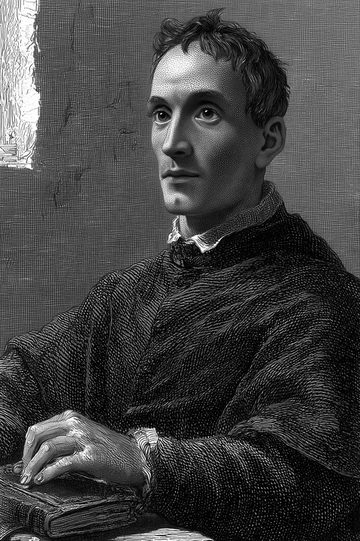
Jacques de Bourges
Jacques de Bourges (died 1714) was a missionary priest and travelling companion of Pierre Lambert de la Motte, Bishop of Berytus, on his expedition toward Cochinchina between 1660 and 1666. He shared every trial of the journey through Turkey, Persia, the Indies and the kingdom of Siam, where the small party laid the foundations of what would become the Paris Foreign Missions Society. Back in France, he published this account in 1666, one of the very first French narratives of the overland route to the Far East, before setting out again himself on mission and ending his career as Vicar Apostolic of Siam.
All books by Jacques de Bourges →Relation du voyage de Monseigneur l'Evesque de Béryte: Our editorial work
The book you have just read first appeared in Paris at the start of 1666, from the bookseller Denys Béchet, under a title that was itself an itinerary: Relation du voyage de Monseigneur l'Evesque de Béryte, vicaire apostolique du royaume de la Cochinchine, par la Turquie, la Perse, les Indes, etc., jusqu'au royaume de Siam et autres lieux. It is this original edition, and not the 1668 reprint, that served as the basis for the present version. The copy consulted is the one held by the Bibliothèque nationale de France in its Réserve des livres rares.
Jacques de Bourges had divided his account into seventeen chapters of unequal length. We have made twelve of them. The chapters devoted to Persia have been joined, as have the three descriptive chapters on Siam, the two chapters of the crossing toward Tenasserim, and the two chapters recounting the mission at Ayutthaya and the failed attempt toward Canton. Conversely, the very long chapter on the road from Aleppo to Basra has been split in two, at the moment the small party joins the caravan, and the chapter that mixed the description of India's religions with the crossing of the Mughal states has been divided where the journey resumes. The author's seventeen original headings have been kept as subtitles within the modern chapters, so that the reader can always find the architecture of 1666 beneath that of today. The printer's paratext (dedicatory epistle to the king, preliminary address to the reader, privilege, errata and table) has been set aside; the Latin prayer that closes the final chapter is indeed the author's own and has been kept.
Before / after
On verra du moins par la Relation simple que j'en vas faire, ce que peut une courageuse resolution, soutenue de la grace de Dieu. On avoit crû jusques à present que le voyage de la Chine estoit impossible aux François, mais M. l'Evesque de Beryte en a ouvert le chemin, par une voye jusqu'à present inconnuë en France, & neantmoins facile & seure, laquelle il semble que Dieu n'a fait réussir que pour détruire les craintes de ceux que l'incertitude & la difficulté du voyage auroyent pu détourner d'une entreprise si grande & si sainte, comme celle de porter la Foy aux peuples les plus éloignez de l'Europe.
By this simple account which I am now to set down, it will be seen what a courageous resolution, upheld by the grace of God, can accomplish. It had until now been believed that the journey to China was impossible for Frenchmen. My Lord the Bishop of Berytus opened the way to it by a route hitherto unknown in France, and one that proved easy and sure. It seems God allowed it to succeed only to dispel the fears of those whom the uncertainty and difficulty of the road might otherwise have turned away from so great and so holy an enterprise: that of carrying the faith to the peoples farthest removed from Europe.
The journey mapped
The modern editor