Biography
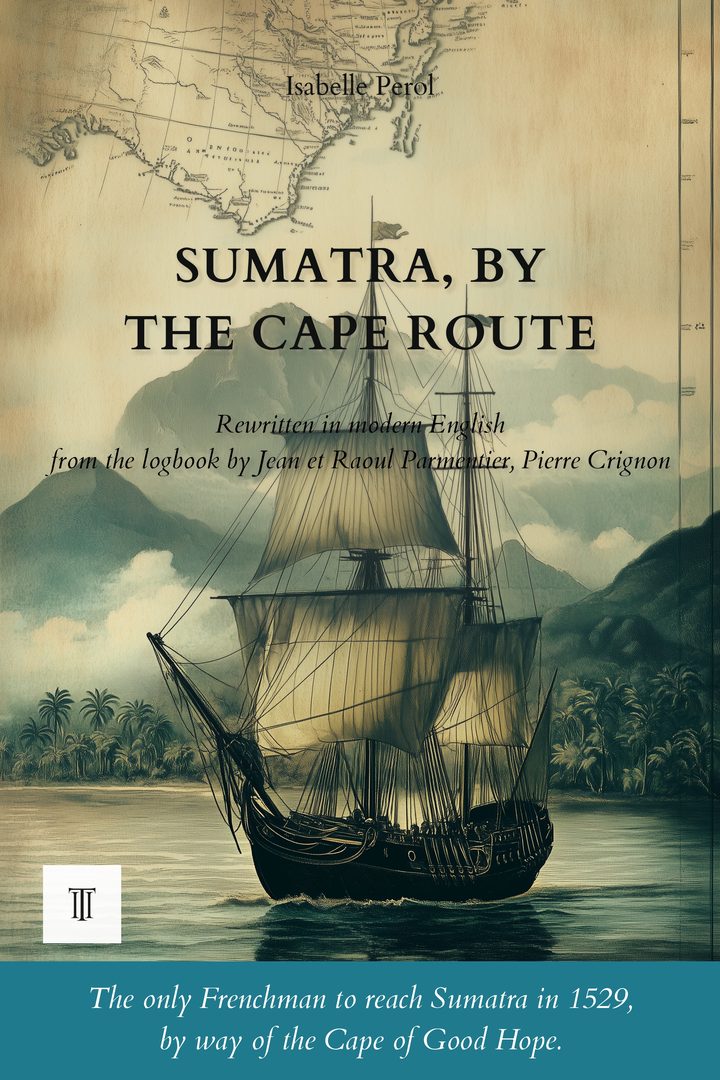
Jean Parmentier (c. 1494-1529), his brother Raoul and their companion Pierre Crignon (c. 1464-1540) led in 1529 the first French expedition to reach Sumatra. Having set out from Dieppe to buy spices without going through the Portuguese, they rounded the Cape of Good Hope and crossed the Indian Ocean. The two brothers died there and Crignon brought back the journal of the voyage, the only direct testimony of this attempt.
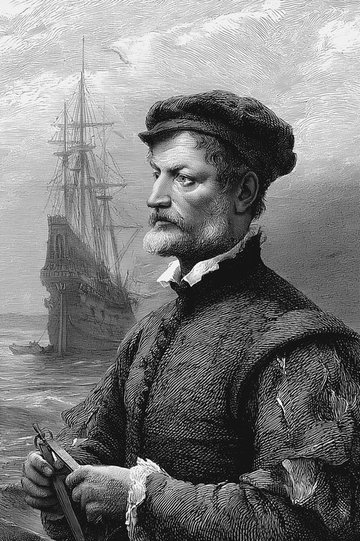
Jean was born in Dieppe in 1494, Raoul five years later. The Norman port was then home to a renowned school of cartography, where Jean trained in the drawing of sea charts, world maps and globes. He was also a poet, crowned several times at the rhetoric competitions known as palinods, in Dieppe then in Rouen between 1518 and 1524. The two brothers sailed for Jean Ango, a Dieppe shipowner and financial backer of Francis I, to Newfoundland, Guinea, Brazil and the West Indies. Crignon, who was older, a cosmographer and a poet as well, served as pilot before becoming a captain.
The Pensée, of two hundred tons, commanded by Jean, and the Sacre, of one hundred and twenty, commanded by Raoul, left Dieppe on 28 March 1529. After a long crossing marked by scurvy, the ships sighted the Maldives on 18 September, the island of Nias on 20 October, the coast of Sumatra on the 29th, and anchored at Ticou, on the western coast of the island. Jean, who was ill, died on 3 December and was buried ashore; Raoul died five days later and his body was committed to the sea. The survivors, commanded by Pierre Mauclerc and Guillaume Sapin, sailed down the coast as far as Indrapura, where they obtained only about 375 kilos of pepper. A storm separated the two ships after the Cape of Good Hope; they returned to Dieppe in May or June 1530.
The account owes its singularity to its author, who is neither a merchant nor an official chronicler. It contains the course records and astronomical observations of a man of the trade, but also the speeches that Jean Parmentier delivered before the crew, the description of the services celebrated on board, the autopsy that the captain had performed on two sailors who died at sea before committing them to the deep, and the first French notes on the inhabitants of Sumatra, their trade and their mistrust of the newcomers. The voyage is told as a failure, which commercially it was.
Crignon published in Paris, in 1531, the Description nouvelle des merveilles de ce monde et de la dignité de l'homme, which brings together the verses composed by Jean during the voyage and his own Déploration sur la mort des Parmentier; ten years later he produced a new piece in their memory. The journal itself was printed by Louis Estancelin in 1832, then republished by Charles Schefer in 1883 in the series Recueil de voyages, under the title Le discours de la navigation de Jean et Raoul Parmentier de Dieppe. Another text attributed to Crignon, the discours d'un grand capitaine de mer français du lieu de Dieppe, appears in the Navigationi et viaggi of Giovanni Battista Ramusio.
The poetic works of Jean Parmentier were edited by François Ferrand in 1971. Since then, historians and specialists of the Renaissance, from Michael Wintroub to Romain Bertrand, have reread this voyage as an observatory of the knowledge, beliefs and misunderstandings that accompanied the first French voyages to Asia.