Biography
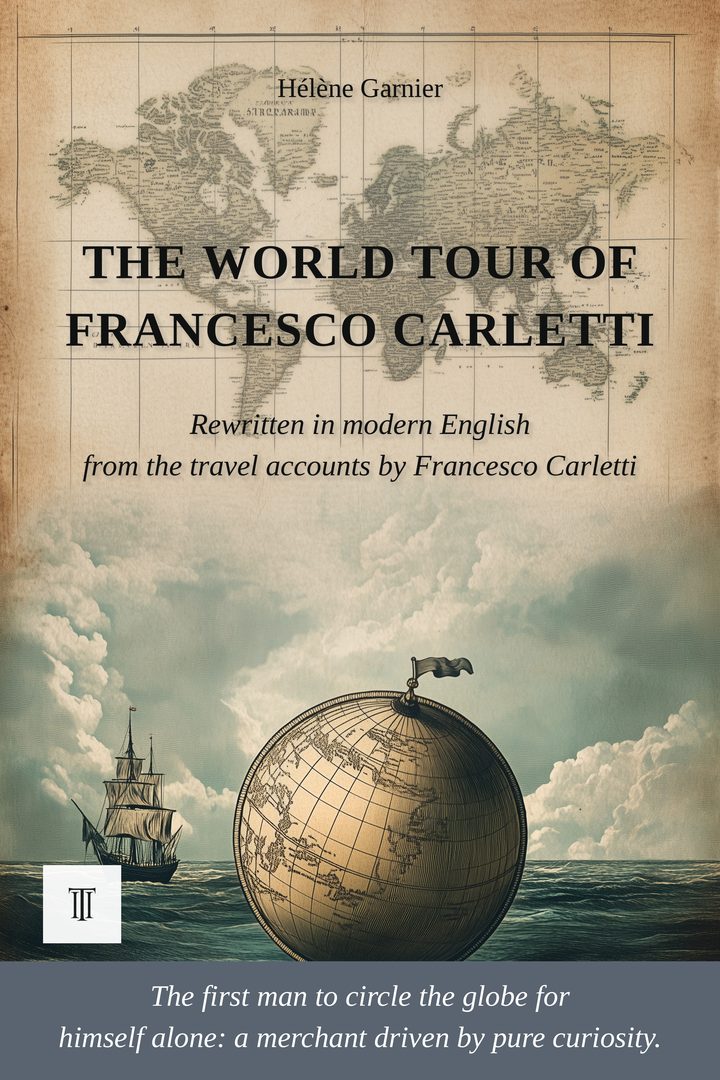
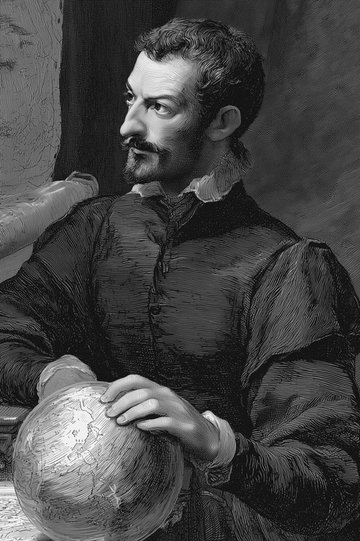
Francesco Carletti (c. 1573-1636) was a Florentine merchant who travelled round the world between 1594 and 1606 with no mission of discovery, following the routes of trade and the opportunities for profit. His account, the Ragionamenti, describes from within the mercantile circuits that then linked Africa, Spanish America, the Philippines, Japan, China and Portuguese India. It is the testimony of a lettered trader on a world already economically of one piece.
Born in Florence in 1573 or 1574, the eldest son of Antonio Carletti, a merchant well versed in trade with Spain, Portugal and their colonies, he was sent in May 1591 to Seville, to a Florentine correspondent of his father, to serve his apprenticeship. Antonio joined him there two years later and the two of them fitted out an expedition to the Cape Verde Islands, intended to buy slaves for resale in the Spanish American colonies. They left Spain on 8 January 1594.
The itinerary thereafter followed the chances of business. After the island of Santiago, the chief slave market of the Atlantic, the Carlettis reached Cartagena de Indias with seventy-five captives, an operation of little profit, then crossed the Isthmus of Panama for Lima, Acapulco and Mexico City, where they stayed from 1595 to 1596. Drawn by the Asian traffic, they reached Manila in June 1596, took ship secretly for Nagasaki, then for Macao, where Antonio died on 20 July 1598. Francesco went on alone by way of Malacca and Ceylon to Goa, left India on Christmas Day 1601 aboard a Portuguese ship, and saw it taken by Zeeland vessels near Saint Helena on 16 March 1602. Put ashore at Middelburg, a neutral subject of the Grand Duke of Tuscany, he remained free but lost his goods, which were confiscated and sold at auction. He pleaded in vain until 1605 and came home to Florence on 12 July 1606, fifteen years after his departure.
His travel notes having been seized with the rest, Carletti had to write from memory, with the help of earlier accounts. The work is presented as twelve conversations, or ragionamenti, addressed to the grand duke and divided into two parts: the West Indies first, the return through Asia afterwards, a division that matches that of the Spanish and Portuguese zones of influence. The final redaction is later than 1609. The interest of the text lies not in geographical discoveries but in the precision of its economic eye: the prices of slaves and silks, rates of exchange, the circumventing of customs regulations, descriptions of cocoa, tea, tobacco, the coconut and cochineal. Carletti voices his Christian unease at what he calls an inhuman traffic while practising it, a contradiction often cited by historians of the Atlantic slave trade. From Goa he brought back three servants, a Korean, a Japanese and a man from Mozambique.
Back in Tuscany, he was master of the grand-ducal household until 1616, then carried out a few diplomatic missions, and died in Florence on 12 January 1636. His book circulated long in manuscript before being printed in Florence in 1701 through the care of Lorenzo Magalotti, under the title Ragionamenti di Francesco Carletti fiorentino sopra le cose da lui vedute ne' suoi viaggi. Carlo Gargiolli gave a complete new edition of it in 1878, and the text was taken up again in the twentieth century under the title Ragionamenti del mio viaggio intorno al mondo. It serves today for work on the first mercantile globalisation, on Atlantic slavery, and on Japan in the last years of the sixteenth century.