Captivity and Travels Through Three Empires
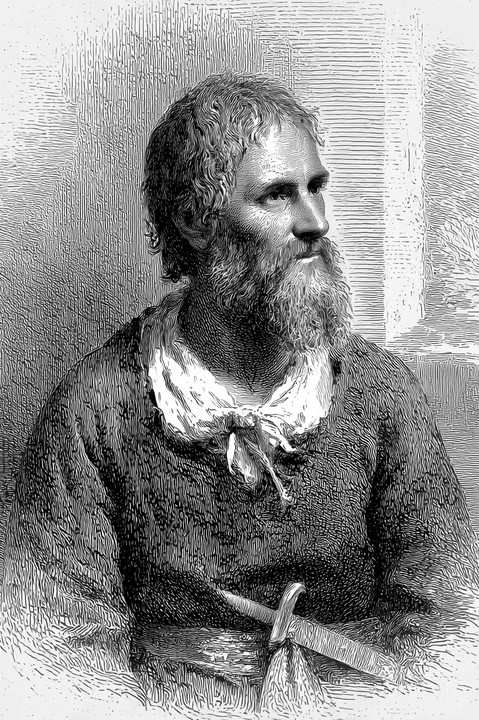
September 25, 1396, on the plains of Bulgaria. The chivalry of the West has just been annihilated before Nicopolis. A sixteen-year-old Bavarian boy, esquire to a lord of Munich, is dragged away among the prisoners. His name is Johannes Schiltberger. He will not see Europe again for thirty-three years.
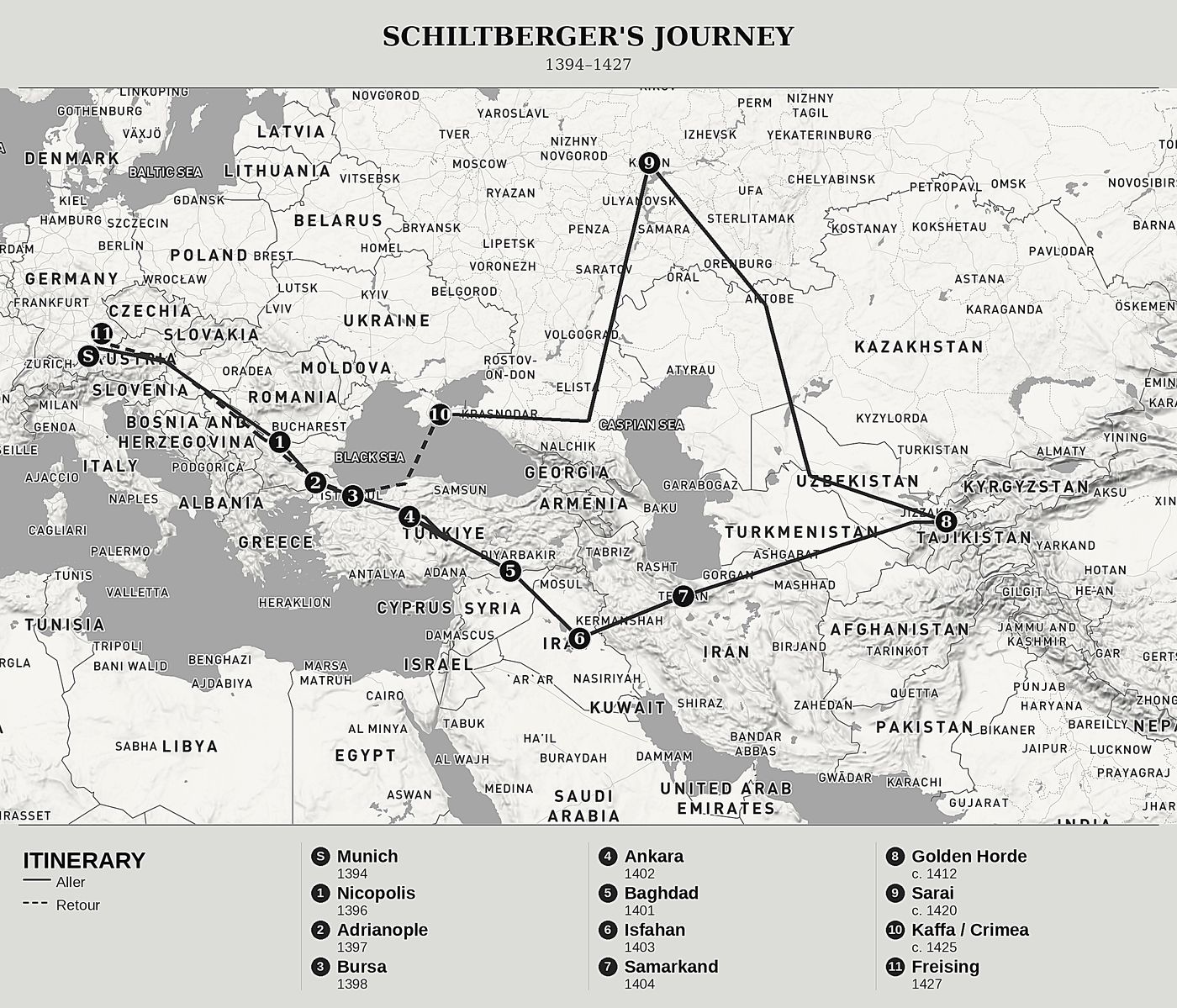
For six years he runs on foot before the horse of Sultan Bayezid I, through the campaigns that carry the Ottomans across Karaman, the lands of Burhan al-Din, and the conquest of Anatolia. Then Tamerlane defeats Bayezid at Ankara in 1402, ransoms the young captive, and takes him east to Samarkand. He watches Baghdad razed to the ground, the seven thousand children of Isfahan put to the sword, and the conqueror's army set out for India. When Tamerlane dies, Schiltberger passes to the service of his sons, Shah Rukh and Miran Shah, in Persia and the Caucasus, then spends four years under Miran Shah's son Abu Bakr. A fugitive Mongol prince, Çekre, drags him next across the steppe and through Siberia, among hairy tribesmen and sled dogs, into the Golden Horde. There he meets Sadur Malik, a Tatar queen leading four thousand horsewomen, and learns the Our Father in Armenian and Tatar. He crosses the Crimea, reaches Constantinople twice held sacred, makes two pilgrimages to Jerusalem under Muslim escort, and sees the wonders and sultans of Cairo. In 1427, serving his last master, Manyaš, he finally escapes on horseback and walks the rest of the way home to Munich.
Captured at sixteen, Schiltberger spent more than three decades as a captive, page, and soldier at the courts of Bayezid I, Tamerlane, and the princes of the Golden Horde before dictating his memoirs around 1430 to a scribe in Bavaria. First printed in Augsburg around 1473, his account is the earliest German eyewitness testimony on the post-Mongol Orient, and remains six centuries later one of the only Western views of that world from within. This edition modernizes the Frankfurt am Main print of 1570, a rare survival of the sixteenth-century tradition, and restores the narrative to the form in which it nourished European curiosity about the East for three hundred years.
Text modernized, illustrated, and annotated by Thierry Ruolz, this edition follows Schiltberger's own itinerary chapter by chapter, from the disaster of Nicopolis to the long road home, with maps, a glossary of the peoples and places he names, and the two Pater Noster prayers, in Tatar and in Armenian, that close his account.